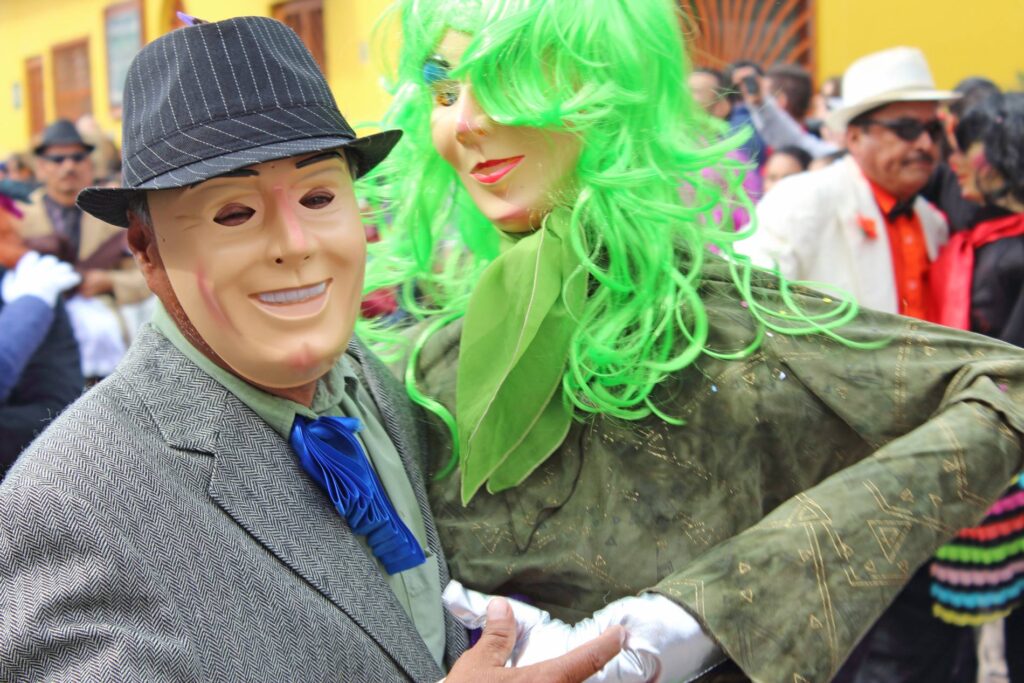
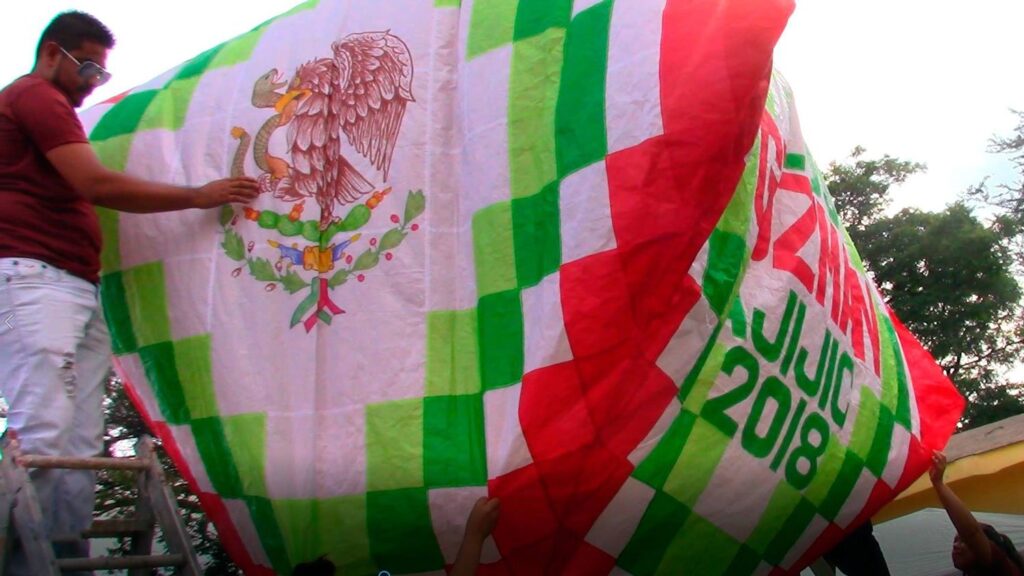
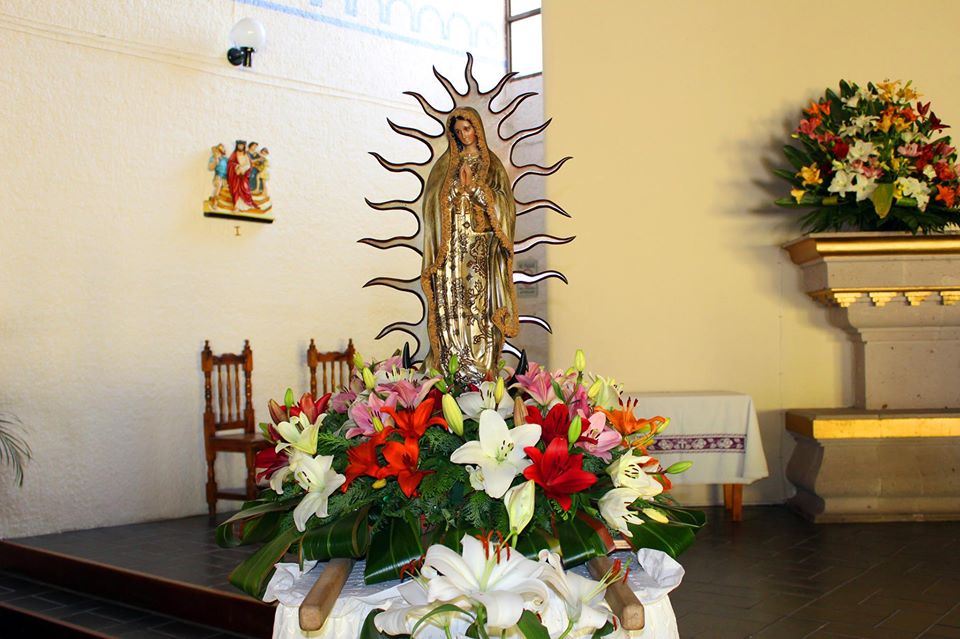
The Jamaica of the Past Festival in Ajijic is one of the most meaningful celebrations marking the beginning of Holy Week in this lakeside town. Held in Ajijic’s main plaza on Palm Sunday, it forms part of the community atmosphere surrounding the local Passion of Christ reenactment, one of the town’s most important religious traditions.
This is far more than a simple fair. It is a popular community celebration where local memory, family gatherings, traditional food, and faith all come together.
What makes this edition even more special is that the official Pasión de Cristo Ajijic organizers are presenting it as a 20th anniversary celebration, giving it even greater significance within the town’s cultural life.
What is a verbena?
A verbena is a traditional public celebration, usually held outdoors in a town plaza or along the streets. These festivities are often connected to religious or civic occasions and are known for their lively atmosphere, music, traditional food, games, and community participation.
In Mexico, verbenas have long been part of local culture. They are occasions where people of all ages come together to celebrate, socialize, and keep their traditions alive.
What is the Jamaica of the Past Festival in Ajijic?
The Jamaica of the Past Festival (Verbena Jamaica del Pasado) is a community celebration linked to Palm Sunday and the beginning of Holy Week in Ajijic.
The event is designed to evoke the spirit of earlier times through food, music, decorations, and traditional games. Its purpose, however, goes beyond entertainment. It is also connected to the collective community effort that helps sustain Ajijic’s Passion of Christ reenactment, one of the town’s most important religious and cultural expressions.
That is why the festival holds value far beyond being a festive outing. It brings together popular tradition, neighborhood participation, and shared memory.
Why is it called “Jamaica”?
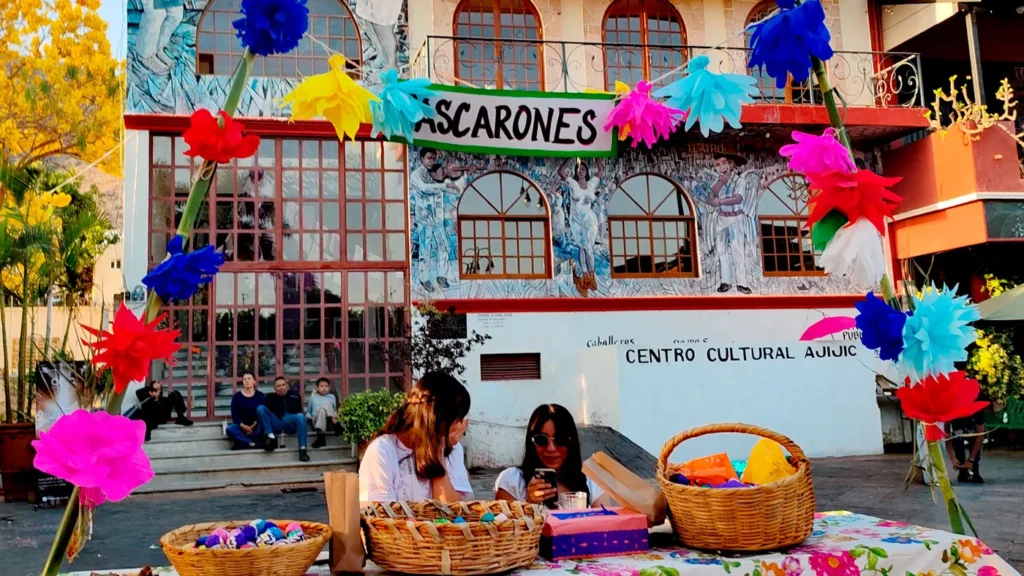
In this context, the word jamaica does not refer only to the hibiscus flower or the well-known hibiscus drink. In Mexico, the term can also refer to a traditional public fair or community gathering, similar to a kermés or neighborhood festival, with food, music, and socializing.
That meaning fits Ajijic’s celebration very well. The full name of the event reflects not only a connection to the past, but also an older way of gathering as a community, sharing food, and celebrating together in a public space.
Its connection to Palm Sunday and Holy Week
The Jamaica of the Past Festival takes place on Palm Sunday and is closely tied to the beginning of Holy Week in Ajijic.
It is not a separate or unrelated event. On the contrary, it is woven into the town’s religious and cultural calendar and reinforces the connection between faith, local culture, and community participation.
In Ajijic, Holy Week is not experienced only through church services and processions. It also lives through the popular traditions that surround those sacred days, and this festival is one of the most meaningful of them.
How is the festival celebrated?
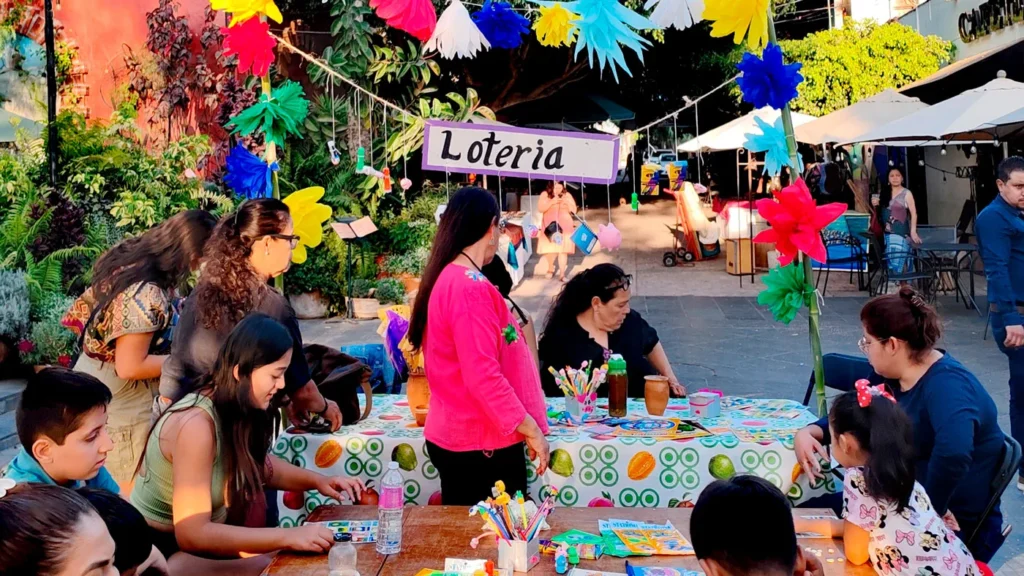
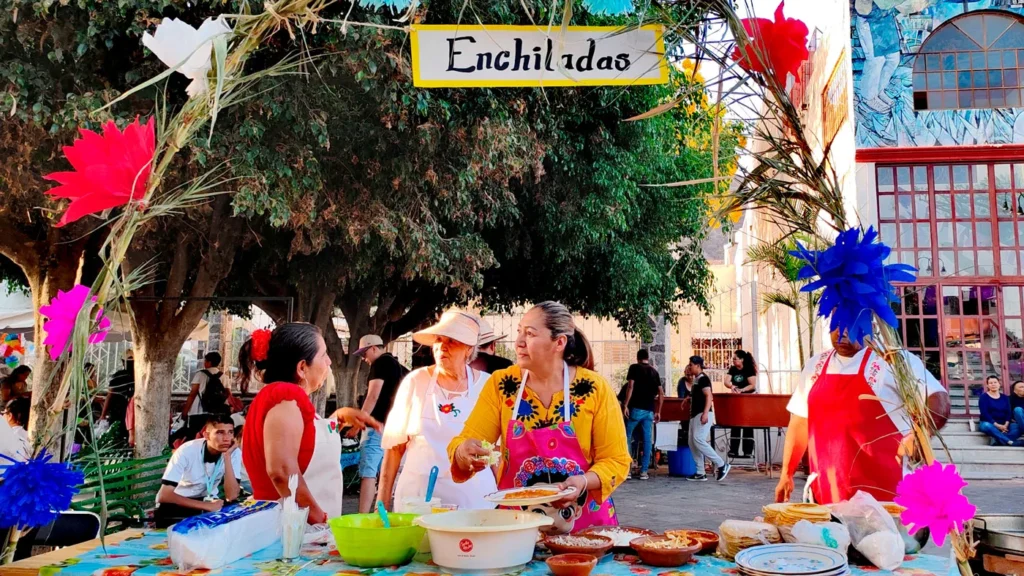
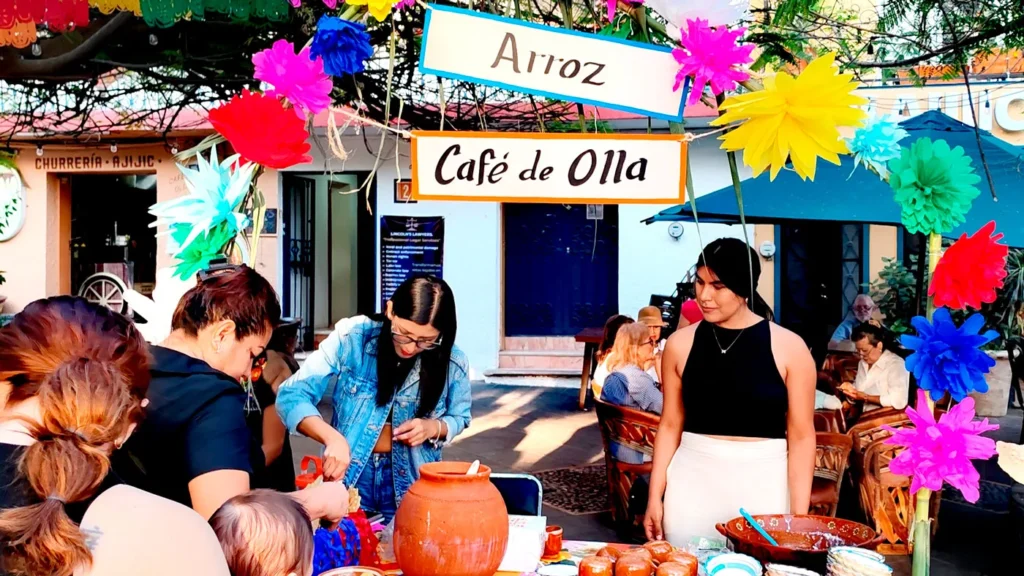
Ajijic’s main plaza is the heart of the celebration. Food stands, traditional decorations, music, and community activities fill the square, creating an atmosphere that recalls the town’s older festive traditions.
One of the most distinctive aspects of the event is the food. The festival is known for preserving traditional cooking methods, in some cases avoiding electricity and gas in favor of older techniques that reflect how food was prepared in the past.
This makes the culinary side of the festival much more than just something to eat. It becomes a living expression of the town’s cultural memory.
The visual atmosphere is also part of what makes the event so memorable. Candles, lanterns, and oil lamps, together with music and traditional games, help recreate the spirit of old-fashioned town celebrations.
Traditional food, drinks, and joy
Showing up to the Jamaica of the Past Festival hungry is almost part of the experience. Food is one of the main highlights of the event.
Visitors can enjoy a wide variety of Mexican favorites, including crispy tacos, tamales, pozole, and enchiladas, along with traditional desserts such as capirotada, a Mexican bread pudding typically eaten during Lent, and pan tachihual, a regional traditional bread.
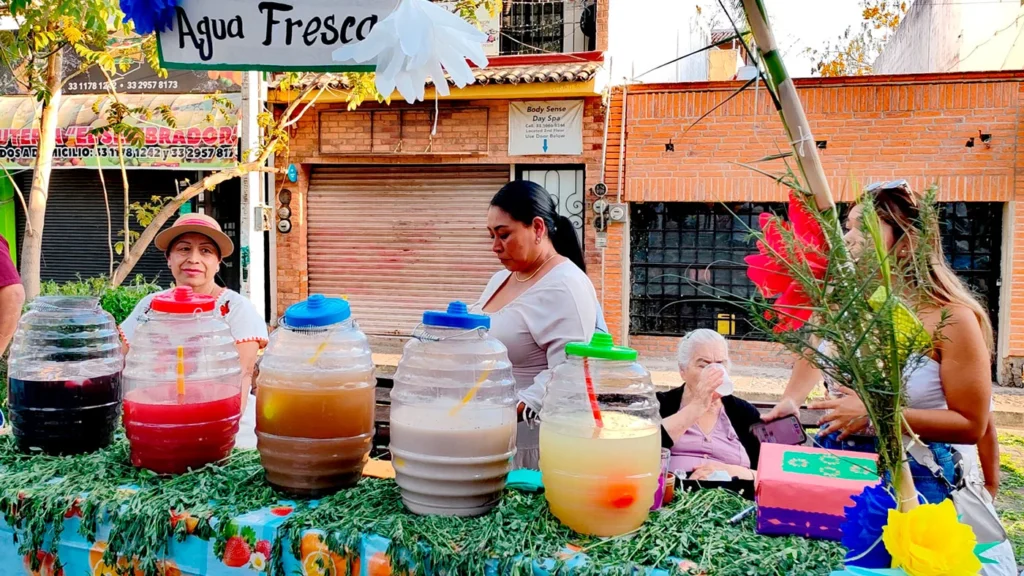
There are also classic drinks such as ponche (fruit punch), atole (a warm corn-based drink), and refreshing fruit waters that pair beautifully with the dishes.
Everything is homemade and deeply rooted in local flavor, making the experience feel especially authentic.
Music, dancing, and community tradition
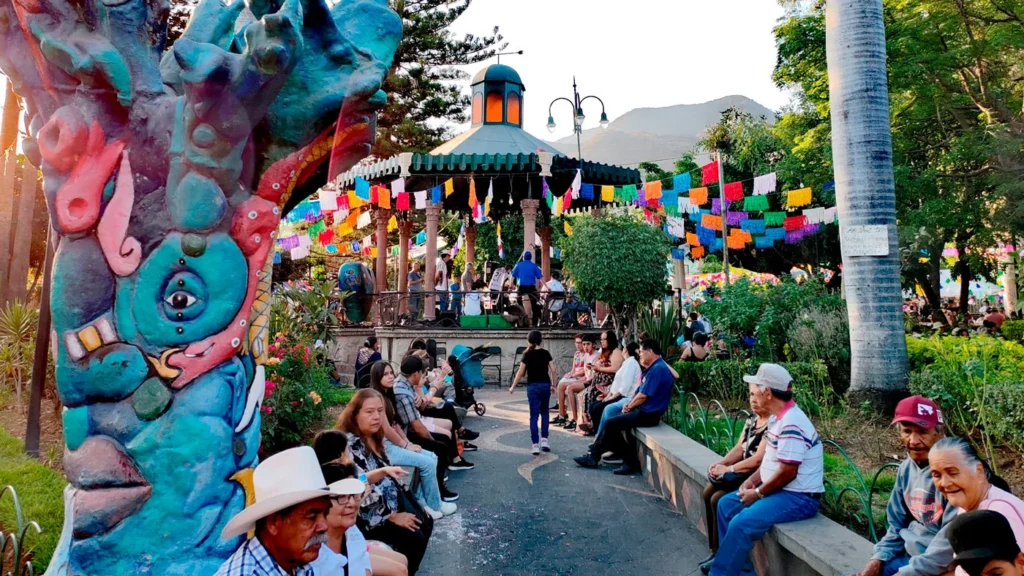
The festival is not only about food. It also includes live music, folk dancing, and activities that bring life and joy to the plaza.
Children and families can join in traditional games such as lotería, a beloved Mexican game similar to bingo but played with illustrated cards.
The event also has a strong community focus. Local residents help organize it, set up food stands, decorate the plaza, and keep these traditions alive year after year.
Food, memory, and small-town atmosphere
Food plays a central role in the festival because it connects the celebration to home, family memory, and local customs.
The traditional snacks, desserts, and old-fashioned way of preparing and serving food are all part of the charm. Because of this, the festival is not simply a place to grab a bite or spend an afternoon. It is a full cultural experience where food, community, and the atmosphere of old Ajijic come together.
A 20-year celebration
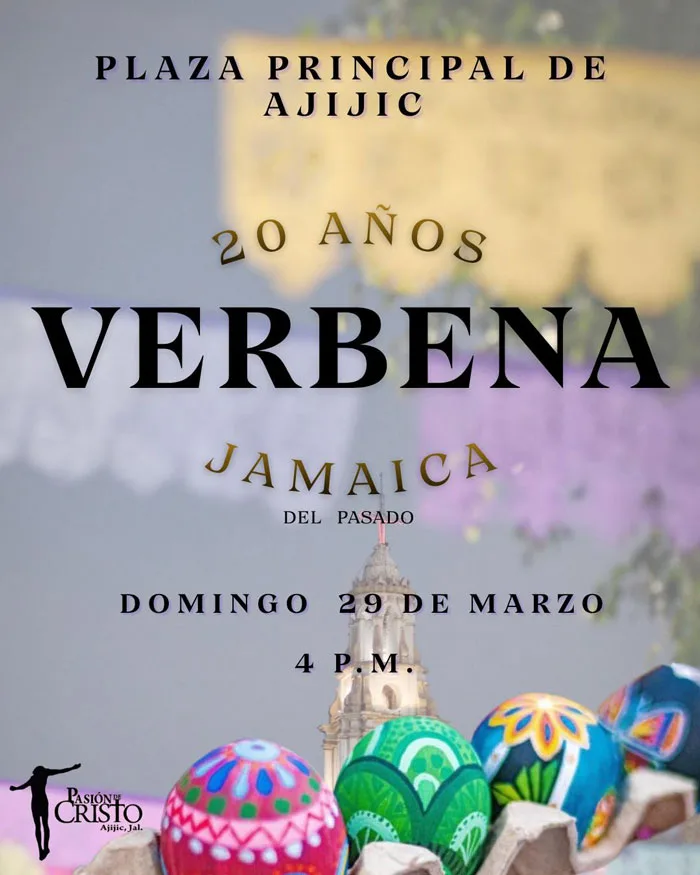
One of the most important details about the current edition is that the official Pasión de Cristo Ajijic page presents it as a 20-year celebration.
That gives the event special weight, because it reflects the consistency and dedication of the organizers, families, volunteers, and attendees who have kept this tradition alive over time.
It also shows that this is not only a tradition of the past. It remains alive because the community continues to celebrate it and share it with new generations, as well as with visitors who come to Ajijic during Holy Week.
Why it still matters today
The importance of the Jamaica of the Past Festival goes beyond its picturesque charm or tourist appeal.
Its true strength lies in the way it brings together essential parts of Ajijic’s identity: faith, memory, traditional food, community life, and collective participation.
In a town that has changed over the years, this celebration helps preserve what is uniquely its own. It keeps alive certain ways of cooking, decorating, gathering, and celebrating that still hold meaning for the community today.
That is why the Jamaica of the Past Festival remains a living tradition.
Tips for enjoying it to the fullest
- Arrive early so you can enjoy the atmosphere and find the best food stands.
- Come hungry, because there is a lot to try.
- Bring cash, since some vendors may not accept cards.
- Wear comfortable clothes so you can walk around and enjoy the event.
- Keep your phone or camera ready, because you will want to capture the experience.
A tradition that keeps the town’s memory alive
The Jamaica of the Past Festival in Ajijic is much more than a popular celebration. It is tied to Palm Sunday, marks the beginning of Holy Week, supports the Passion of Christ reenactment, and keeps alive an older way of gathering as a community.
As a 20th anniversary edition, this year’s celebration carries even deeper meaning. It does not simply look back on the past. It also shows how Ajijic continues to find in its traditions a way to come together, recognize itself, and keep its collective memory alive.