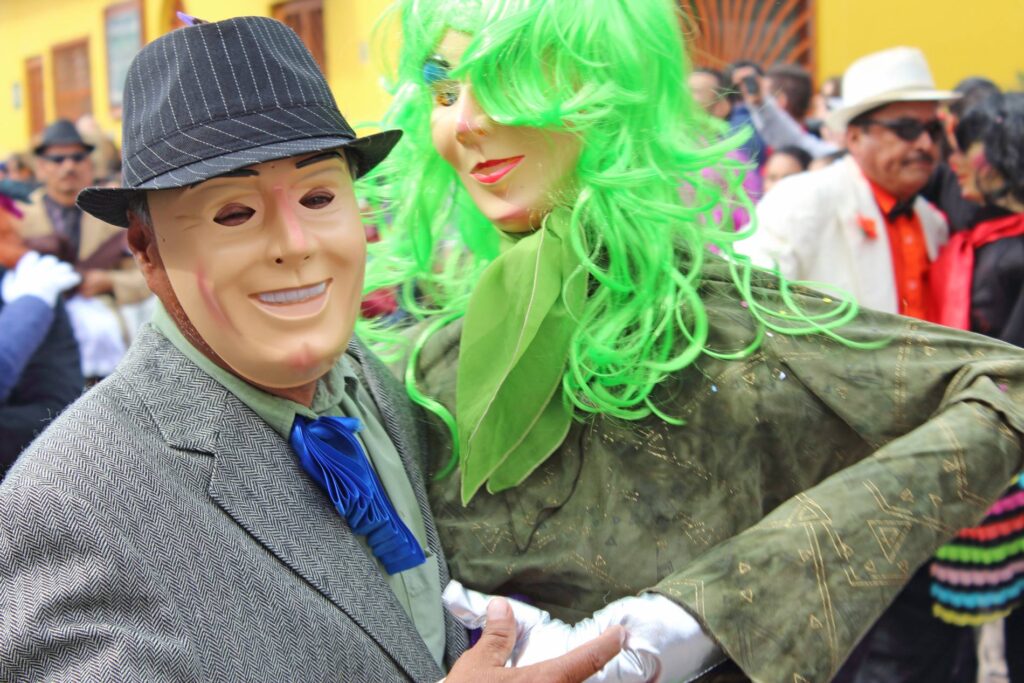
Close your eyes for a moment and picture this: you’re walking down a cobblestone street, the afternoon sun glistens over Lake Chapala, a brass band thunders in your chest—and suddenly, someone wearing an oversized mask and a woman’s dress runs toward you. Before you can react, they throw a handful of flour that covers you from head to toe.
It’s not an accident. It’s a blessing.
Welcome to Ajijic Carnival. This isn’t just any festival—it’s the moment when this Mexican Pueblo Mágico (Magic Town) flips the world upside down. Unlike other places where you simply watch a parade go by, here you’re part of the action. This guide will help you understand what makes this celebration one-of-a-kind, who the key players are, and how to fully experience the 2026 edition like a seasoned local.
Ajijic Carnival 2026: Quick Facts
Location:
- Town: Ajijic, Jalisco (Designated Pueblo Mágico)
- Main areas: Hidalgo Street, Ocampo Street, Constitución Street, Main Plaza, Lienzo Charro (rodeo arena), and the Malecón (lakefront promenade)
When Do the Sayacas Appear?
The iconic Sayacas—local characters wearing exaggerated female masks and colorful dresses—will be active on multiple days, always accompanied by brass bands and parade groups (comparsas). Their route usually begins around 11:00 a.m.
Confirmed Routes:
- Sunday, February 1 | Sunday, February 8 | Saturday, February 14 | Sunday, February 15 | Monday, February 16:
- Route: Main Plaza → Hidalgo → “Las Seis Esquinas” (The Six Corners) → Ocampo → Constitución → Lienzo Charro
- Tuesday, February 17 (Main Day):
- Start: Constitución Street (near the local market zone)
- Route: Constitución → Ocampo → Las Seis Esquinas → Hidalgo
- End: Main Plaza (in front of the San Andrés Church)
What Exactly Is the Ajijic Carnival?
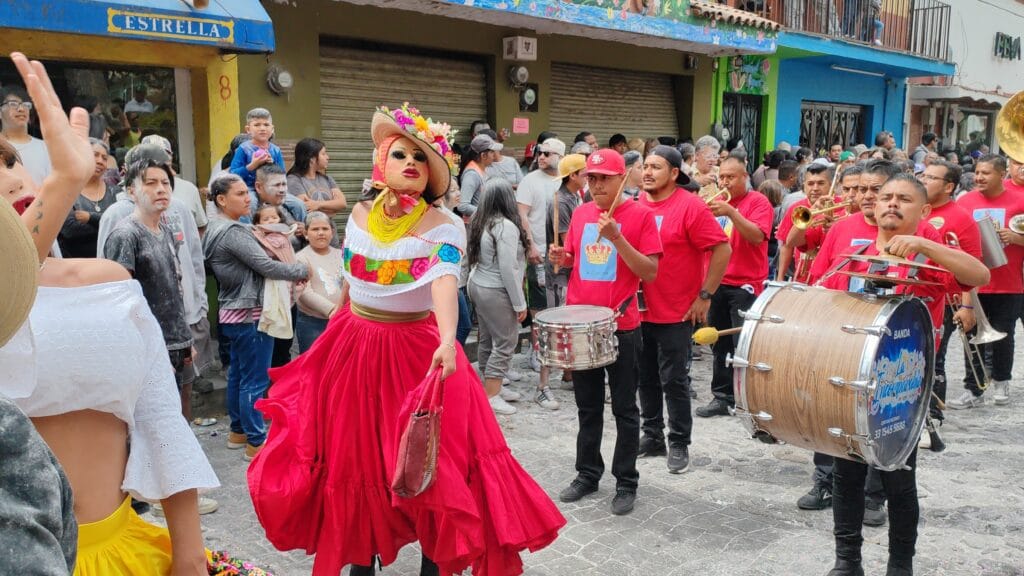
The Ajijic Carnival is a grassroots celebration that takes place in the weeks leading up to Lent and turns everyday village life into a vibrant, joyful chaos. On Sundays and especially the Tuesday before Ash Wednesday, the streets erupt with music, parades, flour fights, costumes, and a deeply communal spirit.
Unlike commercial or tourist-driven carnivals, Ajijic’s version is neighborhood-based and participatory: families organize parade groups, neighbors build and decorate floats, and the local Charros Association hosts free public rodeos known as “Toro de las Once” (The 11 o’clock Bull). Both locals and visitors jump in to dance, laugh—and yes, get completely covered in flour.
This is a celebration where Indigenous traditions, Catholic calendar rituals, and Mexican street humor blend into a unique cultural experience. Here, there are no spectators—only participants. Everyone plays, everyone gets messy, and everyone contributes to a collective choreography of joy.
More than a festival, it’s a declaration of Ajijic’s living identity.
The Legend Behind the Mask: Why Do We Throw Flour?
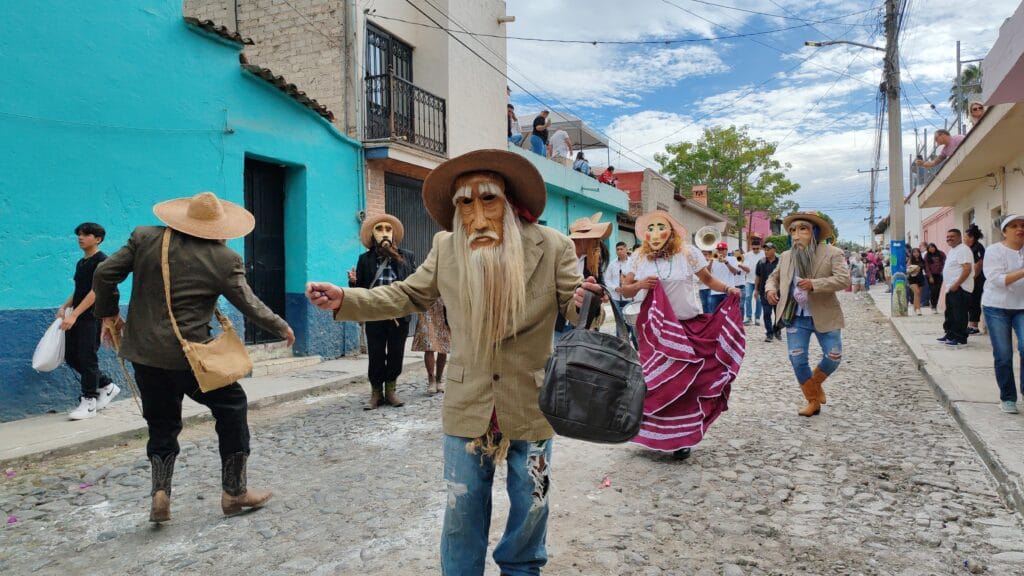
Ever wondered why people in Ajijic throw flour instead of just dancing? The answer comes from a centuries-old oral tradition passed down through local families.
The Twins and the “Water Face”
According to legend, long before the Spanish arrived, villagers spoke of two magical twins tied to the origins of the Sayacas. These siblings were associated with the word xayacatl, from the Nahuatl language, which in local lore translates to something like “face that produces water.”
The story goes:
- The girl (La Sayaca): Mischievous and playful, she loved chasing the village boys for kisses. When they ran away in fear, she threw ground corn at them in frustration.
- The boy (El Sayaco): Calm and kind, he preferred tossing flower petals instead.
Over time, the cornmeal became flour, the flower petals became confetti, and a game of childhood mischief transformed into a sacred tradition of collective laughter.
Editorial Note: As with all living traditions, details may vary depending on who tells the story. That’s part of the magic.
Carnival Tuesday Parade: The Grand Finale
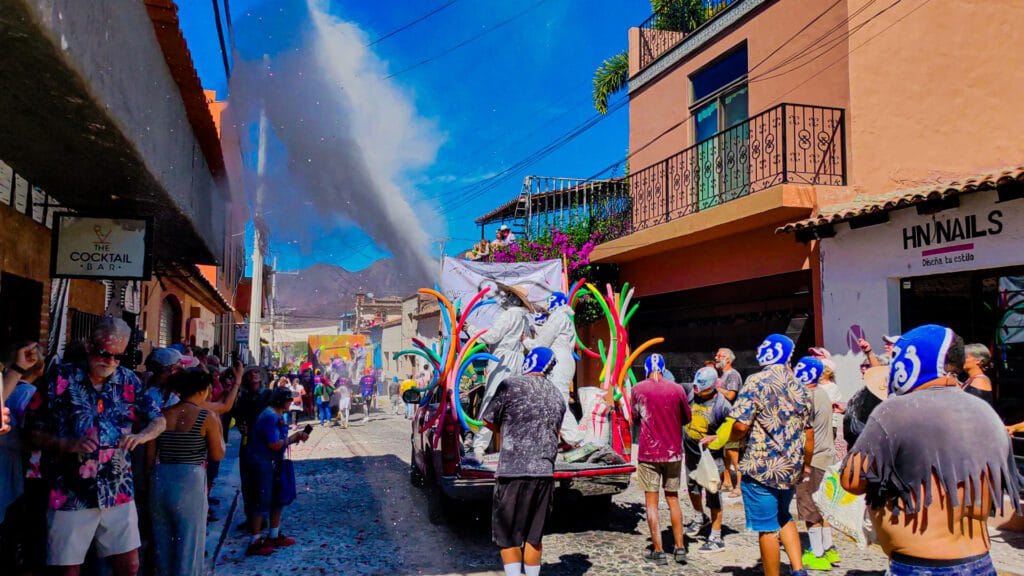
If you think you’ve seen it all—think again. The Carnival Tuesday Parade is the climax of Ajijic’s celebration. It’s the day when the entire town becomes a stage for colorful chaos, unfiltered joy, and community-driven spectacle.
What Makes It So Special?
- Mass participation: From kids in handmade costumes to adults dressed in wild drag, everyone joins in.
- Outrageous floats: Expect everything—drag queens, mythical beasts, political satire, stilt dancers, and glitter-covered revelers.
- Live music troupes: Brass bands, drumlines, DJs on moving trucks, and dance crews bring every block to life.
- Flour and paint battles: A tradition unique to Ajijic. Yes, you’ll probably get “breaded” in flour head to toe. And no, there’s no escape.
The Wrestlers’ Ritual
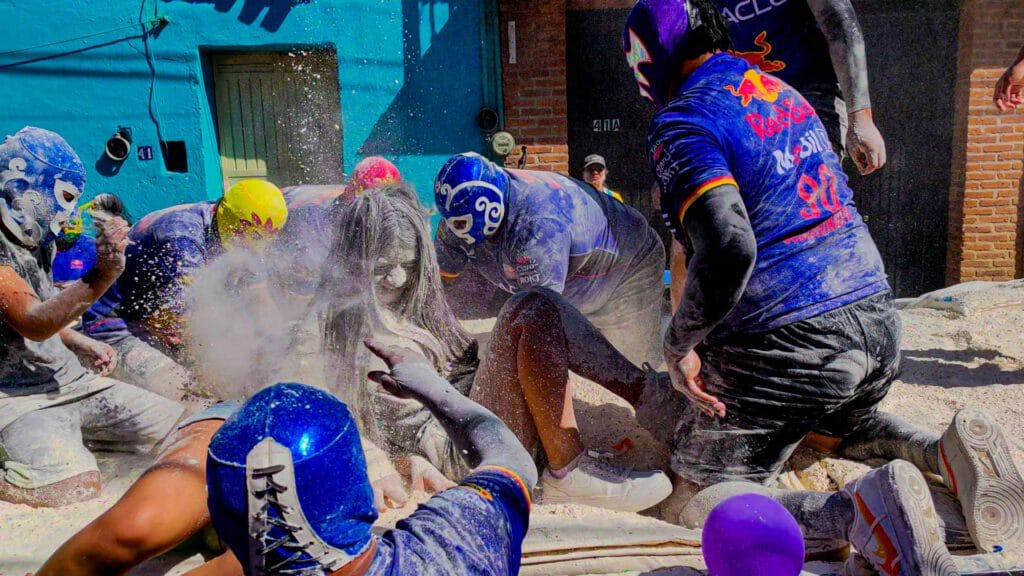
One of the most anticipated (and feared!) moments comes courtesy of a group dressed as luchadores—Mexican-style wrestlers. Wearing matching shirts and masks, they roam the parade looking for “volunteers” to pull onto their pickup truck, where a cushioned platform awaits.
What comes next? A flour shower that marks you as an honorary Ajijiteco. Locals love it. Visitors rarely escape it.
Sayacas in Action
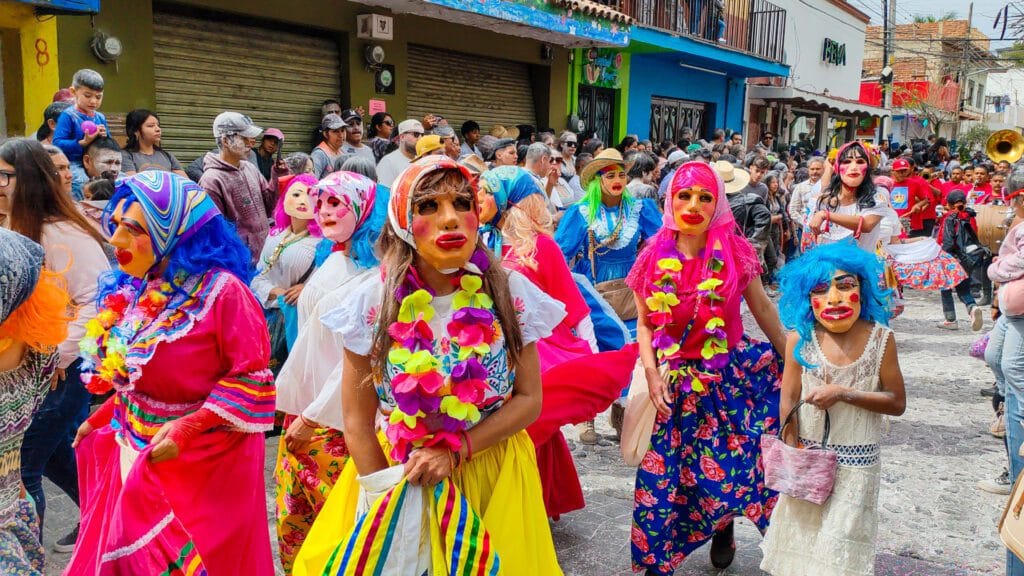
A cornerstone of the carnival, the Sayacas are flamboyant, masked figures in colorful dresses who tease, dance, and dust spectators with flour. Playful and unfiltered, they symbolize the spirit of carnival: a world turned upside down where laughter rules and nothing is off-limits.
An All-Senses Experience
This isn’t a parade you simply watch—it’s one you feel. You’ll smell the confetti, hear the brass vibrations in your bones, and yes—probably taste flour in the air.
It’s the purest expression of Ajijic’s bold, rebellious, and community-rooted spirit.
The Carnival Parade Route – Tuesday, February 17, 2026
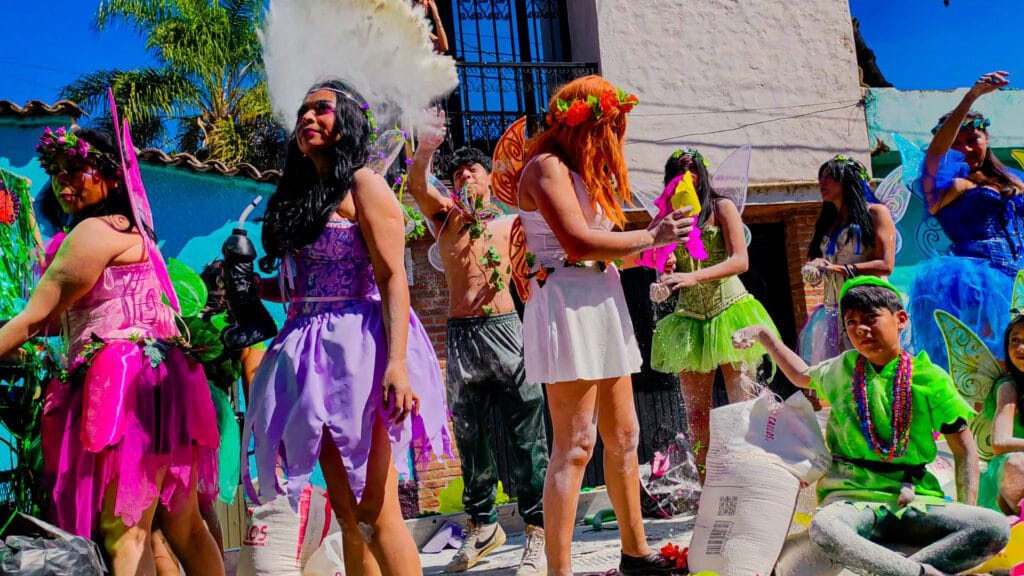
The parade follows an extended U-shaped route that links traditional neighborhoods with Ajijic’s bustling center.
- Staging area (10:00–11:00 a.m.): Contingents, floats, and Sayacas gather at Constitución and Revolución Streets on the town’s east side. This is the best time to see costumes up close before the madness begins.
- Parade starts (11:00 a.m.): The procession heads west along Constitución, which later becomes Ocampo. The crowd grows as it nears the town center.
- “Las Seis Esquinas” Pivot: The six-street junction of Ocampo, Álvaro Obregón, and Hidalgo is the spiritual epicenter. Expect flour battles, roaring music, and total joyful congestion.
- Final leg on Hidalgo Street: From there, the parade moves east on Hidalgo, the town’s main tourist and commercial strip, leading to the Main Plaza.
- Grand finale at the Plaza: The route ends in front of the San Andrés Church, where a flour war erupts and live music kicks off in the plaza gazebo.
Note: Routes and times may change due to security or local logistics.
Post-Parade “Recibimientos” (Public Receptions)
After the parade, Ajijic’s social fabric becomes visible in the traditional recibimientos—open banquets hosted by the local Charros Association.
- What are they? Public feasts featuring tacos, beer, tequila, and brass bands—usually held near the Malecón.
- Who attends? Community leaders, parade organizers, and everyday folks gather to celebrate and receive honorary sashes.
- What’s next? The recibimiento bridges into the jaripeo, a paid rodeo event that often packs the town’s Lienzo Charro.
2026 Event Calendar: A Whole Season, Not Just One Day
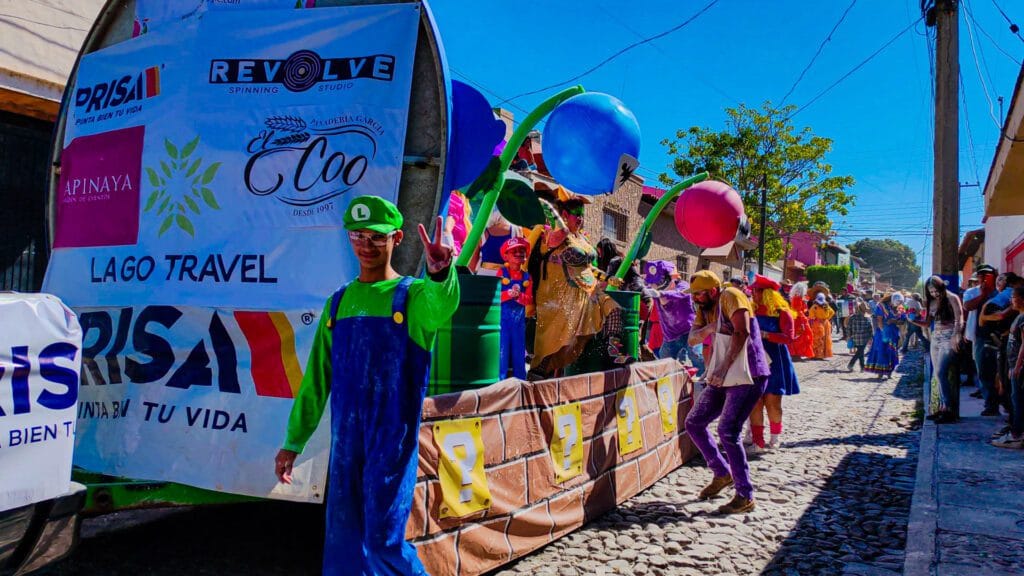
Many assume carnival only happens on Tuesday, but Ajijic’s celebration is a weeks-long marathon of joy, flour, and tradition.
Sunday Rituals Begin February 1, 2026:
- 10:00 a.m.: Sayacas and brass bands start parading through the streets.
- Final destination: The town’s Lienzo Charro for the traditional Toro de las Once (11 a.m. rodeo show).
Highlight Events & Musical Acts:
- Sunday, February 1: First Recibimiento + Toro de las Once. Featuring Los Pichones, La Incomparable, and La Misma Banda.
- Sunday, February 8: Recibimiento + rodeo. Featuring Los Intocables, Estrellas del Lago, and Loma Santa.
- Saturday, February 14: Special Recibimiento. With Tlayacapan and La Misma Banda.
- Sunday, February 15: Grand Recibimiento + rodeo. Featuring Banda El Gallito and Banda Rivereña.
- Monday, February 16: Recibimiento + tradition. Featuring Banda Loma Santa.
- Tuesday, February 17:
- Carnival Parade through the town center, with comparsas, Sayacas, Sayacos, music groups, and floats.
- Final blowout concert at the Lienzo Charro with Tlayacapan, Los Explosivos, and Los Cadetes de Juan Carlos Paredes.
Pro tip: Always check for final schedules and artist confirmations as they may change.

Frequently Asked Questions (FAQ)
Yes, but be mindful of flour-heavy zones. Supervision and basic eye/mouth protection (goggles or masks) are recommended.
No. Most events on the streets are free. Some jaripeo rodeos at the Lienzo Charro may charge admission.
Arrive early. Private lots near town fill up quickly. Expect to walk a few blocks.
Absolutely! Many tourists join in. Just follow the vibe, ask for tips, and show up in festive spirit.
Stick to the sidelines and avoid central parade zones. Masks and goggles help, or enjoy from low-exposure spots.
Conclusion: Ajijic, A Town Born to Celebrate
Ajijic Carnival isn’t just about music and flour fights—it’s living proof that this lakeside town was built for joy. Here, tradition isn’t a chore—it’s a beloved ritual that’s passed down, reinvented, and shared with infectious enthusiasm.
If you visit during carnival, don’t just watch—immerse yourself. Because in Ajijic, laughter, culture, and music aren’t just celebrated… they’re in the air you breathe.