The Passion of Christ in Ajijic is one of the most meaningful Holy Week traditions in the Lake Chapala area. More than a religious reenactment, it is a living expression of faith, memory, and community that turns the town itself into a stage and its residents into an essential part of a tradition that has been passed down from generation to generation.
To understand Ajijic beyond its lakeside beauty, its cultural life, and its identity as one of Mexico’s Pueblos Mágicos—a federal designation for towns recognized for their cultural and historical value—it is worth taking a closer look at this celebration. Here, a deeper side of Ajijic comes into view: one that preserves its roots, uses its streets as symbolic space, and keeps alive a tradition that still brings together neighbors, families, organizers, and visitors around the same story.
What Is the Passion of Christ in Ajijic?
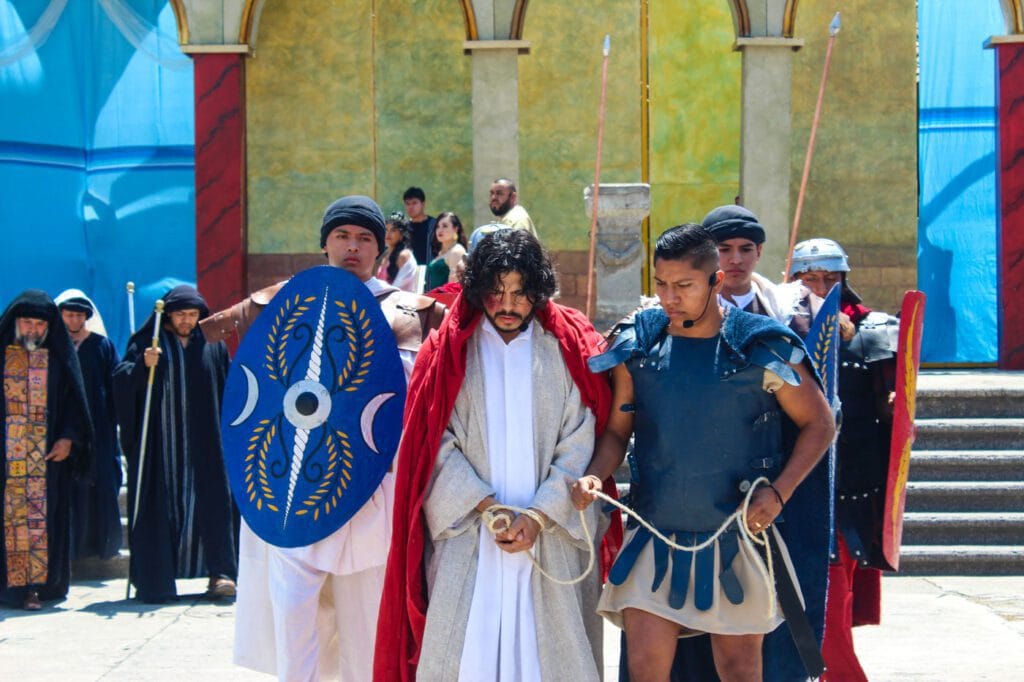
The Passion of Christ in Ajijic is a community reenactment of the life, Passion, death, and resurrection of Jesus Christ during Holy Week. Its value lies not only in its religious meaning, but also in its cultural strength, its local roots, and the way it involves much of the town.
Unlike a performance staged inside a closed venue, the reenactment in Ajijic unfolds in motion. The church atrium, the cobblestone streets, the malecón—the town’s lakeside promenade—and the areas near the hillside all form part of the route. This means the town is not merely the backdrop to the story, but an active part of it.
That quality completely changes the experience. It is not only about watching a reenactment. It is about accompanying a tradition that takes place in public space and transforms everyday locations into places filled with meaning.
It is also important to understand that this celebration does not belong only to the realm of spectacle. For many people in Ajijic, the Passion of Christ is a way to express faith, remember religious teachings, and strengthen community life. That is why it remains one of the most heartfelt local expressions of Holy Week.
Passion of Christ in Ajijic – 2026 – 47th Edition
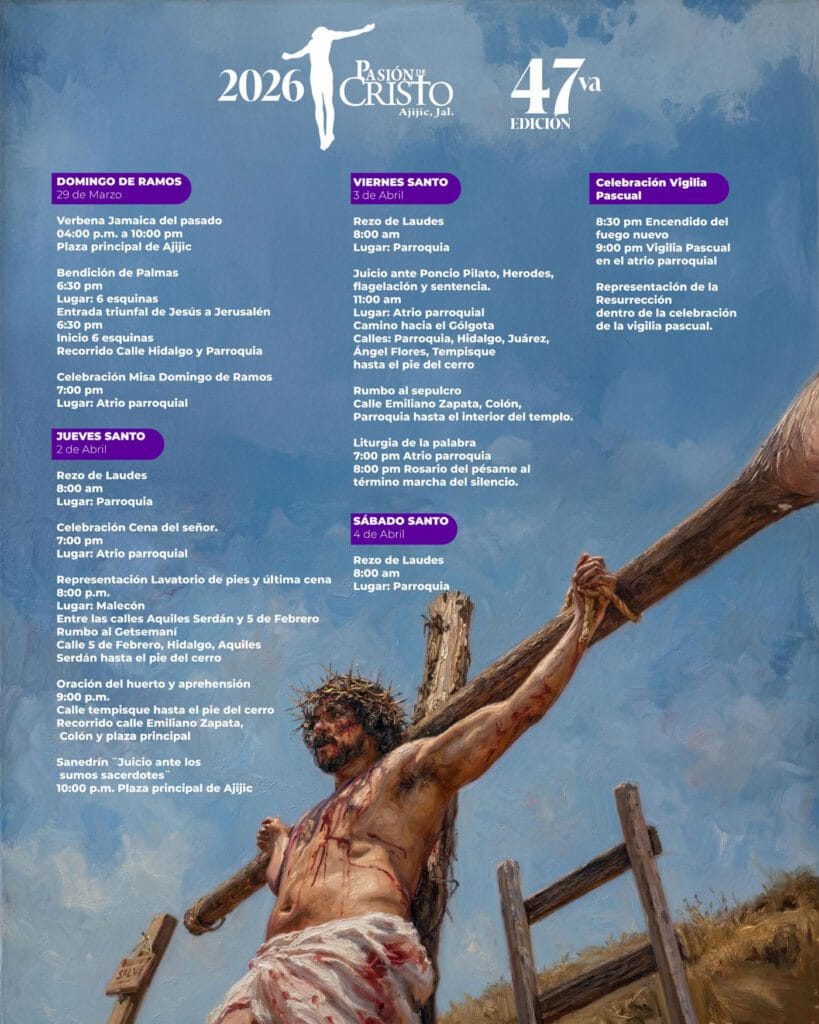
Palm Sunday — March 29
Verbena Jamaica del Pasado
A traditional community fair held as part of Holy Week in Ajijic
4:00 p.m. to 10:00 p.m.
Location: Ajijic Main Plaza
Blessing of the Palms
6:30 p.m.
Location: Six Corners
Jesus’ Triumphal Entry into Jerusalem
6:30 p.m.
Starting point: Six Corners
Route: Hidalgo Street and the Parish Church
Palm Sunday Mass
7:00 p.m.
Location: Parish Atrium
Holy Thursday — April 2
Lauds (Morning Prayer)
8:00 a.m.
Location: Parish Church
Mass of the Lord’s Supper
7:00 p.m.
Location: Parish Atrium
Reenactment of the Washing of the Feet and the Last Supper
8:00 p.m.
Location: Ajijic Malecón
Between Aquiles Serdán Street and 5 de Febrero Street
Procession toward Gethsemane
Route: 5 de Febrero Street, Hidalgo Street, Aquiles Serdán Street, continuing to the foot of the hill
Agony in the Garden and the Arrest of Jesus
9:00 p.m.
Location: Tempisque Street, up to the foot of the hill
Route: Emiliano Zapata Street, Colón Street, and Ajijic Main Plaza
Sanhedrin – Trial before the High Priests
10:00 p.m.
Location: Ajijic Main Plaza
Good Friday — April 3
Lauds (Morning Prayer)
8:00 a.m.
Location: Parish Church
Trial before Pontius Pilate and Herod, the Scourging, and the Sentencing
11:00 a.m.
Location: Parish Atrium
The Way to Golgotha
Route: Parish Church, Hidalgo Street, Juárez Street, Ángel Flores Street, and Tempisque Street, continuing to the foot of the hill
Procession to the Tomb
Route: Emiliano Zapata Street, Colón Street, and the Parish Church, ending inside the church
Liturgy of the Word
7:00 p.m.
Location: Parish Atrium
Rosary of Sorrow after the Silent Procession
8:00 p.m.
Holy Saturday — April 4
Lauds (Morning Prayer)
8:00 a.m.
Location: Parish Church
Easter Vigil Celebration
Lighting of the New Fire
8:30 p.m.
Easter Vigil in the Parish Atrium
9:00 p.m.
Representation of the Resurrection
As part of the Easter Vigil celebration
How Long Has This Tradition Been Held in Ajijic?
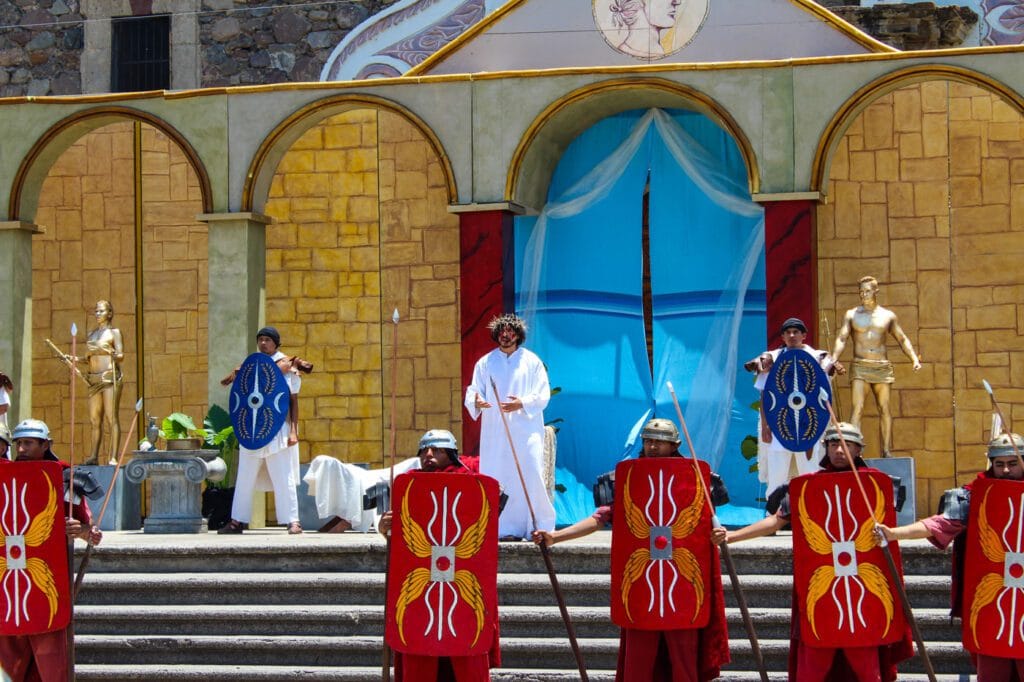
Various references place the modern beginning of this reenactment around 1980. Beyond the exact date, what matters most is its continuity over several decades. In 2026, the community presented it as its 47th edition, reinforcing the idea of a deeply established tradition.
There are not always easily accessible public records that allow the exact starting year of the reenactment, as it is known today, to be fixed with complete certainty. This is common in many popular traditions across Mexico, which often live for years in community practice before being clearly documented in archives or digital media.
What is clear, however, is its permanence. The Passion of Christ in Ajijic is not seen as a recent or improvised custom. It is recognized as a tradition sustained by the participation of families, neighbors, and organizers who have kept it alive over time.
Historically, Ajijic’s religious context also helps explain that continuity. The Parish of San Andrés Apóstol has long been one of the town’s symbolic centers, and popular religious theater is part of a broader Mexican tradition tied to faith formation and community life.
How Holy Week Is Lived in Ajijic During the Reenactment
The reenactment unfolds over several days of Holy Week, moving through moments of solemnity, reflection, and finally hope. Each day carries a different tone and helps build a deeper spiritual and communal experience.
Palm Sunday: The Symbolic Beginning
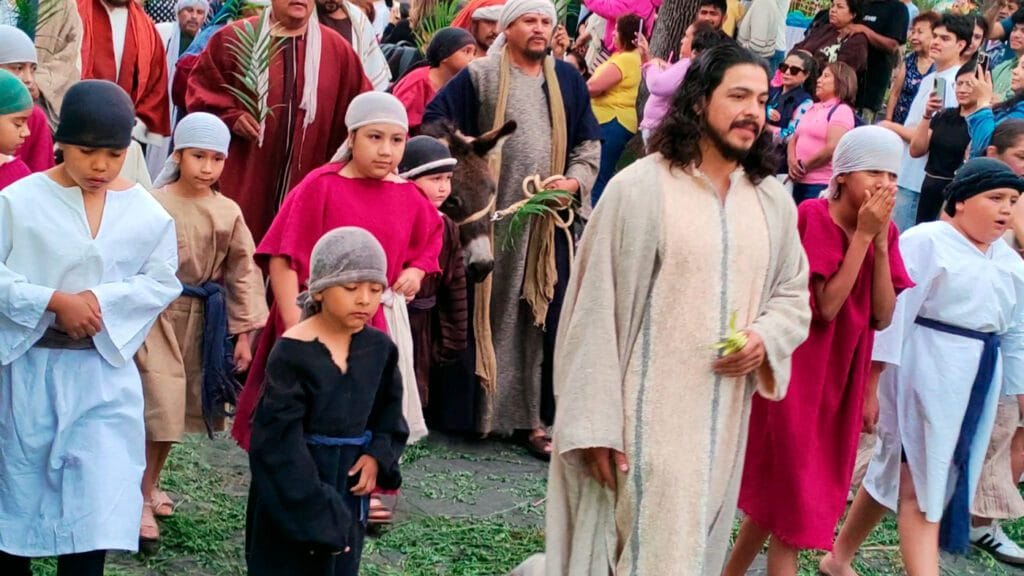
Palm Sunday marks the beginning of the most visible moments of the celebration. The blessing of the palms and Jesus’ triumphant entry open Holy Week with an atmosphere that still carries a sense of joy, while already foreshadowing the intensity of the days to come.
In Ajijic, one of the best-known points of this day is the area called Las Seis Esquinas, or “The Six Corners,” which serves as part of the symbolic starting point of the route. From there, the town begins to enter a different rhythm. The streets fill with people who are not only watching, but accompanying the event.
This day also tends to overlap with community activities that reinforce the town’s atmosphere during this season. That mix of solemnity, tradition, and shared gathering helps prepare the community for the central moments of the Passion.
Holy Thursday: Intimacy, Tension, and Movement
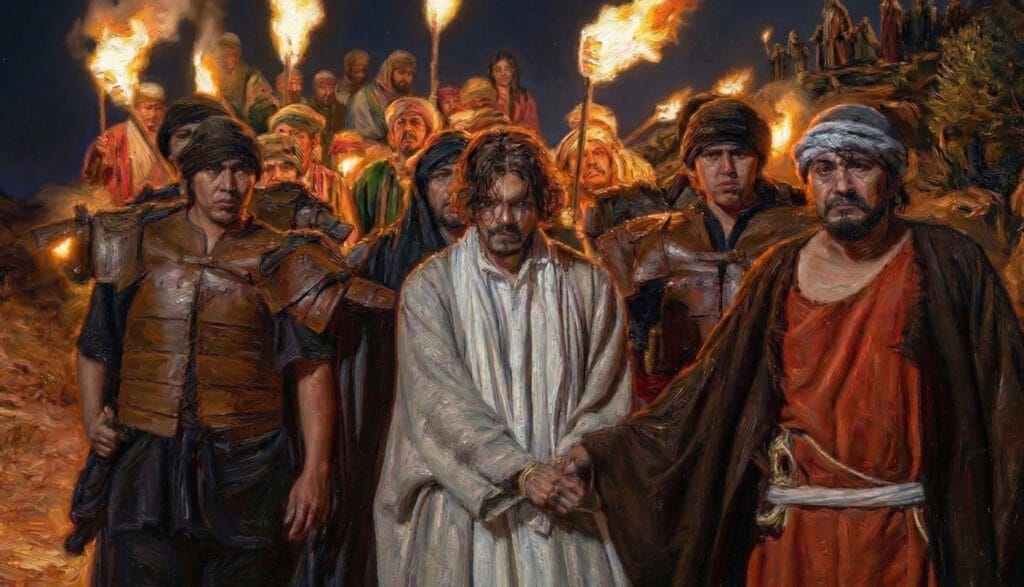
Holy Thursday brings together scenes that shift the tone of the reenactment. This is when moments such as the washing of the feet, the Last Supper, prayer in the garden, and the arrest of Jesus take place.
In Ajijic, one of the most interesting features is that these scenes do not always remain in a single location. Some unfold in emblematic places such as the malecón or in areas near the town center, making the experience more immersive and more connected to the local landscape.
This day carries a special emotional weight. The story begins moving toward conflict. What started as a solemn and public entrance now becomes a narrative of tension, betrayal, and sorrow. That transition makes Holy Thursday the threshold between the initial communal atmosphere and the drama of Good Friday.
Good Friday: The Most Intense Moment
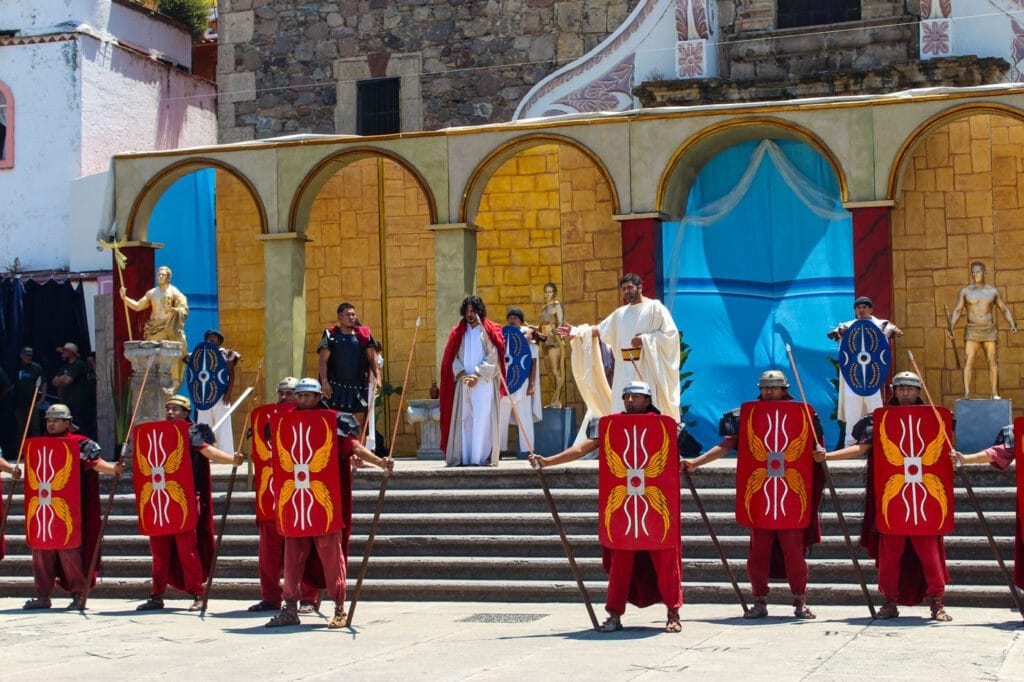
Good Friday is the most powerful point of the entire reenactment. During this day, the trial, sentencing, scourging, via crucis—the Stations of the Cross—and crucifixion are performed.
It is also the moment when Ajijic is transformed completely into a stage. The route through the town’s traditional streets, accompanied by residents and visitors, turns public space into an essential part of the celebration’s meaning. It is not only about watching the actors, but about following the path of a story deeply rooted in the community’s religious life.
One of the most memorable moments is the ascent toward the hillside associated with the final stretch of the route, in the Tempisque area, where the reenactment takes on a particularly powerful visual and symbolic force. The geography of the place does not simply add dramatic intensity; it also helps make the moment unforgettable for those who witness it.
For that reason, for many people, Good Friday in Ajijic is not only a religious act. It is also a collective experience of silence, observation, and accompaniment.
Holy Saturday: A Closing Marked by Hope
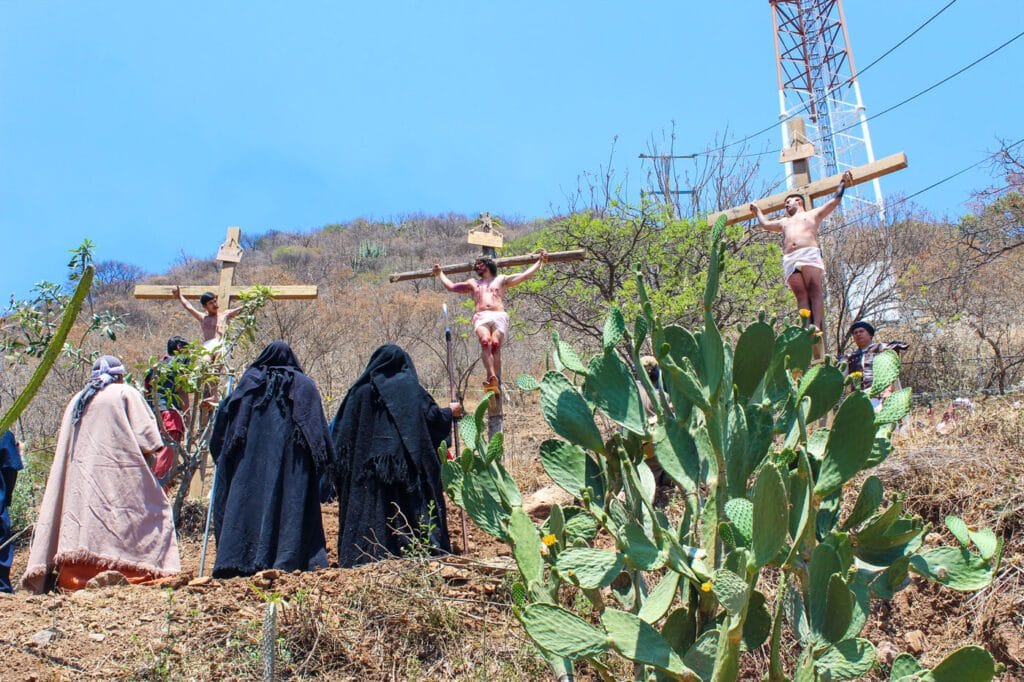
After the sorrow of Good Friday, the tone changes. Holy Saturday and the Easter Vigil introduce the ideas of renewal, resurrection, and hope.
That shift is essential to understanding Holy Week as a whole. The Passion of Christ does not end in sacrifice. It also leads toward the promise of new life. In Ajijic, that ending does not simply conclude the reenactment; it reaffirms the deeper spiritual meaning of the celebration.
What Role Does the Community Play in This Celebration?
The community is the heart of the Passion of Christ in Ajijic. Without neighbors, actors, volunteers, organizers, and families who contribute each year, this tradition simply could not continue.
One of the most valuable aspects of this reenactment is that it does not rely only on a formal structure. It depends on real cooperation among people who contribute time, effort, materials, organization, and presence.
Some perform. Some coordinate rehearsals, routes, and costumes. Some help with logistics, technical support, food, or fundraising. And many others sustain the tradition through less visible but equally important work.
This makes the Passion of Christ something larger than an annual event. It becomes a community practice. Each edition requires commitment, patience, and shared work. In that sense, the reenactment also speaks to the town’s ability to organize itself around a common purpose.
Community participation also allows the tradition to be passed from one generation to the next. Children, teenagers, and adults grow up watching the celebration, hearing about it, and in many cases later becoming part of the process themselves. That is how a custom stops being only a memory and remains a living practice.
Which Places in Ajijic Are Part of the Reenactment?
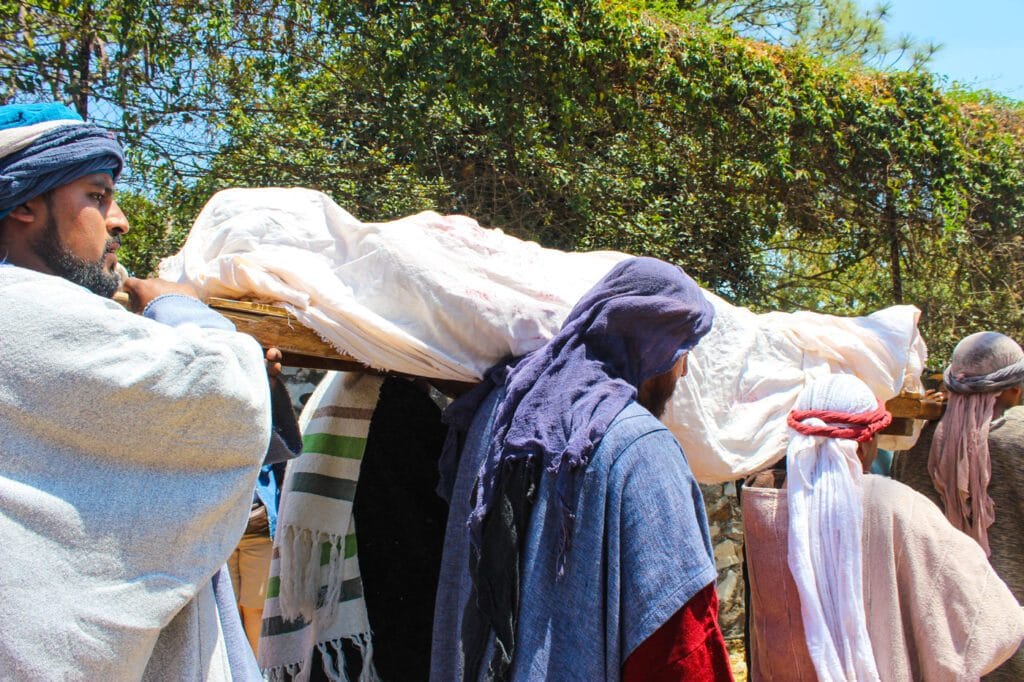
The strength of this tradition also lies in the places where it unfolds. The Parish of San Andrés Apóstol, Las Seis Esquinas, the malecón, the downtown streets, and the Tempisque area turn Ajijic into a unique setting for Holy Week.
The Parish of San Andrés Apóstol holds a central place in the town’s religious imagination. It is not only an emblematic church. It is also a spiritual, historical, and communal point of reference that gives depth to the entire celebration.
The cobblestone streets of downtown contribute a different kind of power. Watching the route move through ordinary daily spaces makes the whole town seem to enter the story being represented. Places that are part of daily life for most of the year take on a ritual character for a few days.
The malecón adds a visual dimension that is especially distinctive to Ajijic. It is uncommon for a reenactment of this kind to engage so closely with an open, public space so closely associated with both residents and visitors. That combination of religious tradition and local geography gives it a very particular identity.
Finally, the Tempisque area has become one of the most remembered points because of the symbolic weight of the final stretch. The climb, the scenery, and the physical effort involved in the route intensify the moment and help explain why this reenactment remains so present in collective memory.
What Is Its Connection to the Verbena Jamaica del Pasado?
The Verbena Jamaica del Pasado is not the same celebration as the Passion of Christ, but it does serve as an important community prelude within the Holy Week atmosphere in Ajijic. In addition to strengthening social ties, it also contributes to the collective effort that makes the reenactment possible.
To speak about the Passion of Christ in Ajijic is also to speak about the social fabric surrounding it. In that context, the Verbena Jamaica del Pasado holds a special place because it brings together families, neighbors, and visitors in a celebration of memory, food, and community.
Its importance is not only practical. It also revives older forms of popular community gathering and helps prepare the town for the most solemn days to come. That combination of tradition, community support, and shared identity gives it a special place in the local calendar.
This gives Ajijic a distinct character. Here, the religious and the communal do not appear as separate worlds. They accompany one another. Before the silence and dramatic intensity of the via crucis, there is also room for memory, togetherness, and neighborly collaboration.
What Makes the Passion of Christ in Ajijic Different from Other Reenactments in Mexico?
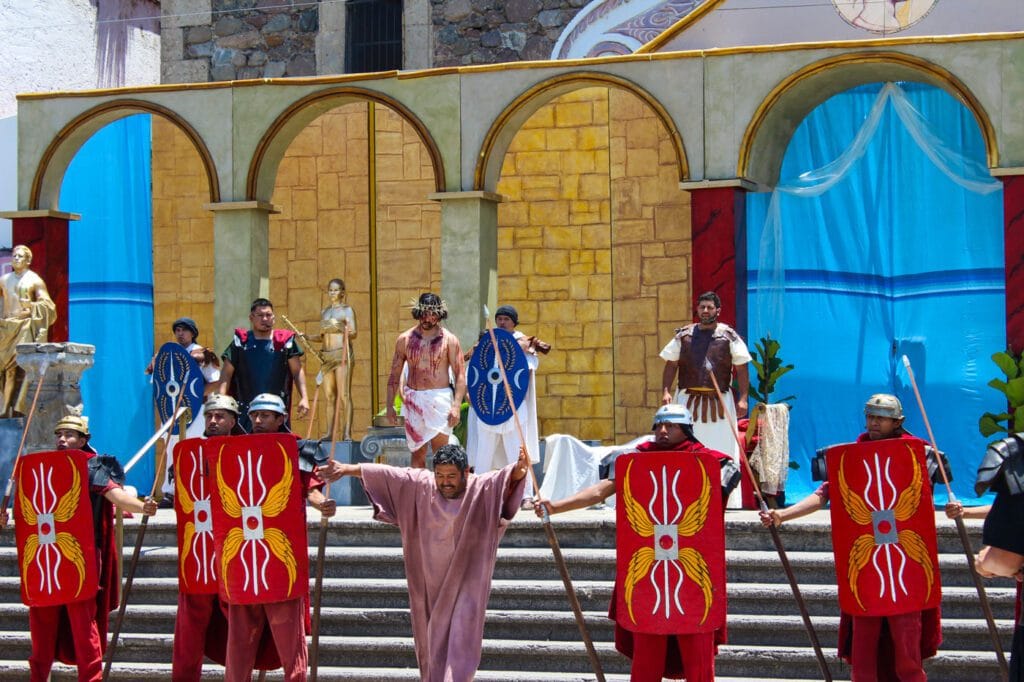
What makes the Passion of Christ in Ajijic special is its community authenticity, its human scale, and its use of the town itself as the setting. It does not seek to be the largest in the country, but rather one of the most living and deeply rooted traditions in the Lake Chapala area.
In Mexico, there are Holy Week reenactments that are widely known for their massive scale or their high degree of institutional organization. Ajijic follows a different path. Its strength lies in its closeness. Those who attend do not feel as if they are watching a distant event, but rather a tradition that still clearly belongs to the community carrying it out.
It is also distinguished by its relationship with the landscape. It is not limited to a single plaza or fixed stage. It moves through streets, squares, the malecón, and the hillside. That dialogue between religious storytelling and local geography gives it a different visual power.
Another important element is that, despite Ajijic’s tourism growth and cultural visibility, the reenactment retains a deeply local meaning. It does not feel created to entertain visitors. Visitors are welcome to witness it, but the tradition still grows out of the town’s own faith and memory.
Why This Tradition Still Matters to Ajijic’s Identity
In an Ajijic known for its lake, its art, its social life, and its appeal to both Mexican and international visitors, the Passion of Christ is a reminder that the town also has deep spiritual, historical, and communal roots. That is one of the reasons it remains so important today.
Traditions do not survive simply because they appear on the calendar. They survive when a community continues to feel that they belong to it. That is exactly what happens here. The Passion of Christ in Ajijic does not continue out of inertia. It continues because it still means something to the people.
During those days, public space changes function. The streets stop being only places of passage and become a shared stage. Daily life pauses, at least a little, to make room for ritual, silence, observation, and memory.
That carries enormous cultural value. At a time when many towns are changing rapidly and some customs are weakening, Ajijic preserves a celebration that still brings together faith, organization, and belonging. That is why this tradition does not speak only about the past. It also speaks about the town’s present and its ability to continue recognizing itself through what it shares.
Tips for Watching It Respectfully and Understanding It Better
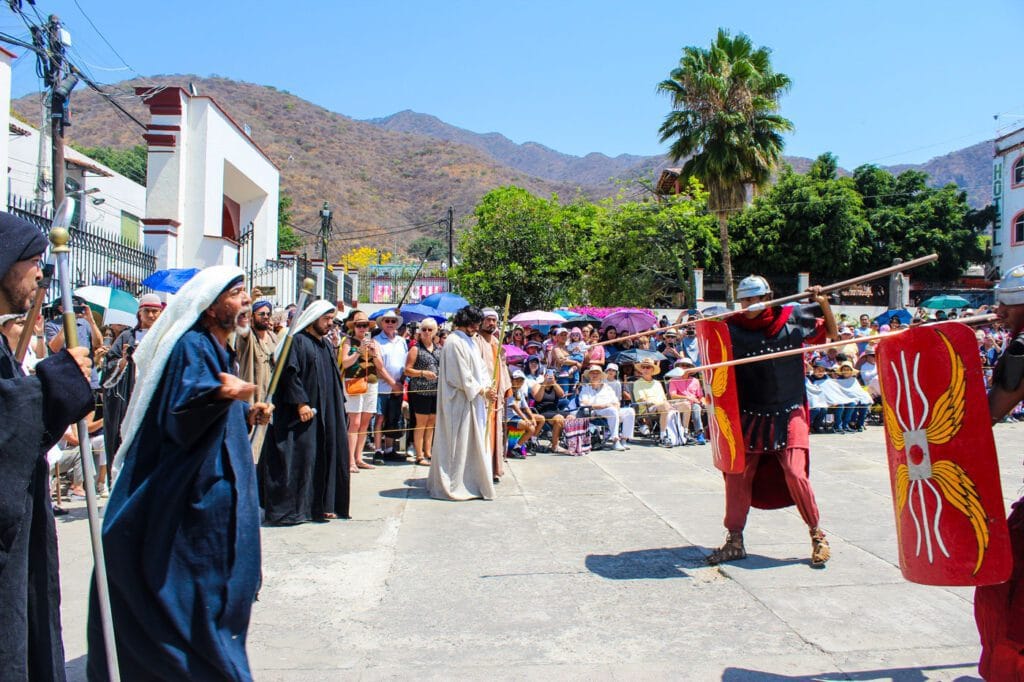
The best way to approach this tradition is with time, patience, and respect. It is not only a visually striking event; it is also a religious and community celebration with deep meaning for many people in Ajijic.
Arriving early helps a great deal. During the main events, there is usually significant movement, and following the route calmly makes it easier to understand how the town’s atmosphere changes throughout the reenactment.
It is also wise to wear comfortable clothing and stay hydrated, especially if you plan to walk a substantial part of the via crucis. The route may involve moving from place to place, waiting, and being out in the sun.
Photos and videos should be taken discreetly. Ideally, visitors should avoid interrupting scenes, blocking the route, or invading the space of those participating from a place of faith. The difference between observing and getting in the way often comes down to small gestures.
Another good piece of advice is to look beyond the main scene. Often, what is most revealing is not only the characters or the crucifixion itself, but the way the community participates, the way silence is shared, and the way the whole town changes its rhythm during those days.
Finally, supporting local activities connected to the celebration is also a way of valuing the collective effort behind it. To understand the Passion of Christ in Ajijic means recognizing both what happens on stage and everything the community does to sustain it.
The Passion of Christ in Ajijic as the Town’s Living Memory
The Passion of Christ in Ajijic remains alive because it still holds meaning for the community. Its continuity shows that tradition, when lived from within, can continue to be a powerful form of identity, faith, and shared memory.
Beyond its religious dimension, this celebration reveals something essential about Ajijic. It shows that the town does not live only through its tourism appeal or its picturesque lakeside image. It also lives through the traditions it chooses to preserve, adapt, and renew over time.
Its decades-long history, its community organization, the symbolic use of local spaces, and the intensity with which each Holy Week is lived make this reenactment one of the most important cultural expressions in the Lake Chapala region.
To understand the Passion of Christ in Ajijic is, in the end, to understand a deeply meaningful part of the town itself: its ability to come together, to remember, and to keep giving meaning to what it shares.
Frequently Asked Questions About the Passion of Christ in Ajijic
It is a community Holy Week reenactment that recreates central moments from the life, Passion, death, and resurrection of Jesus Christ in different parts of the town.
Its modern beginning is usually placed around 1980, although what is most clearly documented is its continuity over several decades and its strong place in local memory.
It unfolds in several parts of Ajijic, including the Parish of San Andrés Apóstol, Las Seis Esquinas, the malecón, the downtown streets, and the Tempisque area.
For many people, Good Friday is the most intense moment because of the via crucis and the crucifixion. Even so, the full Holy Week sequence is what gives the tradition its complete meaning.
It serves as an important community prelude within the Holy Week atmosphere, strengthening social ties and supporting the collective effort surrounding the reenactment.
Yes. Both residents and visitors can attend, as long as they do so with respect, patience, and sensitivity to the religious and community-centered nature of the celebration.
What makes it special is its human scale, its use of Ajijic itself as the setting, and the way it remains a tradition born from the community rather than a spectacle separated from it.
Because it keeps faith, memory, and neighborly participation connected, and because it reminds people that Ajijic’s identity also lives in its deepest traditions.